

If drinking patterns seem to be repeating across generations in your family, there are two questions you may be wondering about: Is alcoholism genetic, and does it run in families?
Genetics play a real part in the risk of living with alcohol dependence, but it doesn’t decide it alone. Your environment and your own life make up the rest, things like how you grew up, what you’ve been through, and the people around you.
Family history can raise your risk without making it certain, and that changes how you see your own situation and how you support someone else with alcohol dependency.

A complex link
Table of Contents
Is alcoholism genetic? What the science says
Genetics account for a part of the risk of developing alcohol use disorder. Research, including a large twin study, suggests that genetic factors explain around 45% to 65% of a person’s risk. The rest comes from environment and life experience.
There’s no single gene that causes alcoholism. Alcohol use disorder is a complex condition, shaped by variation across many different genes. That means two people with a similar family history can end up in very different places.
Is there such a thing as an alcoholism gene?
Two genes – ‘ADH1B’ and ‘ALDH2’ – affect how the body processes alcohol; certain ‘versions’ can change how quickly the body breaks down alcohol, and some can lead to a build-up of a substance called acetaldehyde, which has a protective effect on the risk of alcohol use disorder.
Is alcoholism hereditary, and does it run in families?
Alcohol use disorder can appear across generations in the same family, and genetics is part of why. But family patterns aren’t only about genes. Growing up around a lot of drinking can make it feel normal, and that’s a separate kind of inheritance, learned rather than written into DNA.
Both things can be true at once. You can carry a higher genetic risk, and you can also have grown up around drinking that normalised it. Each factor adds to the other rather than standing alone.
If you can see a pattern in your family, that can tell you earlier whether you may be at a higher risk of alcohol addiction.
-
If a parent has alcohol use disorder, does that mean I will too?
Having a parent with alcohol use disorder raises your own risk above someone without that family history. But many people with this exact background never develop a dependency, and many who do have no family history of dependency.
Risk describes a probability across a group of people. It says nothing certain about what happens to any one person.

Download Our Brochure
What other factors affect the risk of developing alcohol use disorder?
Genetics is one part of a much bigger picture. Environment, mental health, and early life all add to a person’s risk too. Gender plays a part too, through both biology and social pressures.
-
Mental health and alcohol use disorder
Some people drink to manage anxiety, depression, or post-traumatic stress disorder (PTSD). Alcohol becomes a way to cope, and it can feel like it helps at first, by easing anxiety or numbing difficult memories.
But it usually makes the underlying condition harder to manage. This is one of the clearest factors leading to alcoholism that isn’t directly genetic. However, genetic risk for these conditions can overlap with genetic risk for alcohol use disorder.
-
Environment and early life experience
Growing up around heavy drinking can make it feel ordinary. Hard or stressful childhoods, including trauma, can be linked to higher rates of alcohol use later on. Friends and peer pressure add to this too, especially during the teenage years, when drinking habits often start to form.
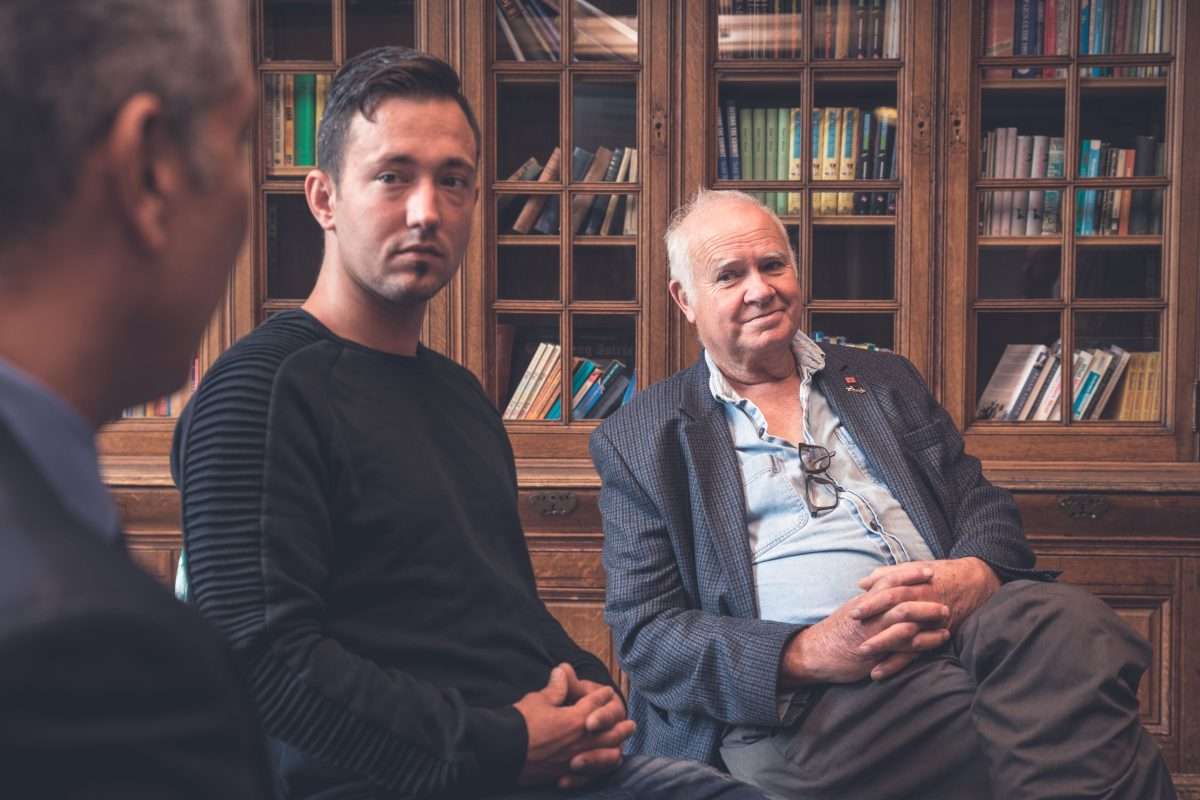
“You have to have faith in the recovery process, doing what is suggested […] when you accept that you are an addict, or an alcoholic, then you start to listen […] so please open your ears. Acceptance is key.”
What does knowing your genetic risk mean for alcohol addiction treatment?
Treatment works better when we understand why alcohol use disorder developed, and genetics is part of that. At Castle Craig, family history is one part of the full picture we build with you from the start, along with your mental health, your environment, and your personal history.
Our approach to addiction rehab follows the recovery-focused, personalised approach recommended in the national guidelines for alcohol treatment. It includes alcohol detox, therapy, and continuing care, with treatment planned around your individual needs.
Signs that alcohol use may have become a problem
It can be hard to tell when drinking has moved from manageable to something more serious. Here are some signs to look out for:
- Needing more alcohol than before to feel the same effect.
- Trying to cut down and finding it harder than expected.
- Drinking taking up a large part of your day, either drinking or recovering from it.
- Feeling shaky, sweaty, or anxious when you haven’t had a drink.
- Continuing to drink even when it’s clearly causing problems.
How to get help for alcohol use disorder
If any of this sounds familiar, for you or for someone in your life, there are several places to start.
Your GP can talk you through what you’re experiencing and refer you if needed. Alcohol helplines offer free, confidential support if you’re not ready to speak to someone in person yet. If drinking has become a bigger, more established pattern, residential treatment is another route.
Getting help tends to happen gradually, through a few smaller conversations, and recovery works the same way once it starts.
If someone in your life is affected by alcohol use disorder
It’s hard to watch someone in your life struggle with alcohol use disorder. You might wonder how much of this is inherited, whether you could have seen it coming, or what you could have done differently. Family history doesn’t answer those questions, and it isn’t a place to look for blame.
If you want to raise it with them, timing and tone are more important than the exact words you use. Choose a calm moment rather than the middle of an argument, and stick to what you’ve noticed.
Family therapy is part of how Castle Craig works with people affected by someone else’s drinking, because it touches those around them too. If you don’t know how to begin the conversation or you want advice on what you’re seeing, you can talk it through with us before deciding anything.
Has reading this has raised questions?
You don’t need to have decided anything yet.
Frequently asked questions about if alcoholism is genetic
-
Is there a genetic test for alcohol use disorder available in the UK?
Not in routine clinical use. Researchers have identified genes that plausibly affect alcohol metabolism and brain chemistry. Your family history and personal circumstances remain the most practical starting point.
-
Can alcohol use disorder skip a generation?
It can appear to. Genetic risk and environment combine differently for each person. That’s why a pattern can seem to disappear in one generation and reappear in the next. Someone can carry genetic risk factors without ever developing alcohol use disorder, while their child, with a different combination of genes and a different environment, does.
-
Can alcoholism be inherited? What are the chances?
There’s no fixed percentage for any one person. Research suggests genetics make up around 45% to 65% of the overall risk across a population. Having a parent with alcohol use disorder raises your personal risk above the general population’s, though it doesn’t set a fixed chance for you specifically.
-
What is genetic alcoholism?
Genetic alcoholism isn’t an official medical term. People often use it to describe the inherited part of someone’s risk of developing alcohol use disorder. It reflects the genes involved in how the body processes alcohol and how the brain responds to it, alongside a person’s individual environment and circumstances.