

Castle Craig is a residential addiction treatment centre in Scotland with almost 40 years of clinical expertise. Our programme is medically led and evidence-based – grounded in what the research supports rather than in any particular spiritual framework.
That distinction matters to a significant number of people. 12 Step programmes, while effective for many, are not the right fit for everyone. Castle Craig offers a rigorous clinical alternative: comprehensive in its approach to the underlying causes of addiction, and built around the individual rather than around any single model of recovery.
Whether you are considering treatment for yourself or for someone in your life, what matters here is the clinical evidence – and what it takes to get well.

Science-backed residential treatment plans
“I came to Castle Craig not really knowing if anything could change for me, and I’m leaving with a sense of hope I hadn’t felt in a long time. I’ll always be grateful to the staff and the place itself for giving me the chance to find my way back to myself and build a better me.”
Non-religious addiction treatment: understanding your options
-
What non-religious rehab actually means
Non-religious rehab – or secular rehab – doesn’t mean it’s rehab for atheists, or that religious people aren’t welcome.
It simply means that different people’s worldviews stay out of the clinical room.
At Castle Craig, there’s no faith framework in your assessment, in your therapy, or in the community around you. The approach is a clinically-led, science-based rehab approach that works without a religious framework.
We build it around your individual treatment needs, and will never ask you about your spiritual or religious beliefs.
-
What about religion in the 12 Steps?
Castle Craig uses 12 Step facilitation as part of our treatment programme.
The 12 Steps are a structured framework for recovery, and a useful clinical tool within a medically led programme. They help you examine your behaviour and build connections with others in recovery.
The word ‘God’ appears in several of the steps, but you don’t need to be religious at all to benefit from them.
AA itself is clear that ‘God’ in the 12 Steps absolutely does not have to be a religious entity. The purpose is to think of a higher power, such as nature, or simply what happens when people come together to help each other.
-
Evidence-based therapies in our secular programme
Within our model of addiction treatment, each daily programme is grounded in evidence-based residential rehab treatment. For example:
- Cognitive Behavioural Therapy (CBT) helps you identify and change the thought patterns that drive addictive behaviour.
- Dialectical Behaviour Therapy (DBT) builds skills for managing emotional distress and difficult situations.
- Trauma-informed care addresses underlying experiences that may be connected to your addiction.
- Mindfulness techniques serve as a clinical tool for stress reduction and emotional awareness.
-
Treating addiction and mental health together
Many people living with addiction are also navigating anxiety, depression, trauma, or PTSD. We assess and treat all together in one programme.
If you’ve received care before where addiction was treated in isolation, or where mental health concerns were attributed to a lack of faith, Castle Craig’s approach is very different. We understand the link between addiction and mental health, and your treatment plan is built from a comprehensive assessment of your medical needs.
Learn more about the addictions we treat.
What to expect from non-religious rehab at Castle Craig
-
Your first conversation – confidential, no pressure
If you haven’t told anyone that you’re considering treatment yet, that’s fine. The first conversation with Castle Craig is entirely on your terms.
You can ask whatever you need to ask, including – about the 12 Steps, other aspects of our treatment programme, or just what daily life looks like. There’s no assessment during this call and no commitment.
If you think that Castle Craig might be the right fit, you can take our free pre-screening addiction assessment.
-
A treatment plan built around you, not a template
When you arrive, the clinical team conducts a full biopsychosocial assessment covering your addiction, your mental health, your physical health, and your personal circumstances. We build your non-religious rehab programme from that assessment.
The plan reflects who you are, what you’re dealing with, and what you need, and a multidisciplinary team reviews and adjusts it throughout your stay.
Read more about what residential rehab involves at Castle Craig.
-
Recovery doesn’t stop at discharge
Castle Craig’s continuing care programme supports you after you leave. It includes structured online aftercare, access to the Recovery Club alumni network, and involvement from family members if that’s appropriate. Aftercare follows the same approach as the rest of the programme, with no religious element at any stage.
Progress after rehab comes with ups and downs. Continuing care means support is still there when you need it, most of all in the first few months.
Contact Castle Craig Residential Rehab Centre
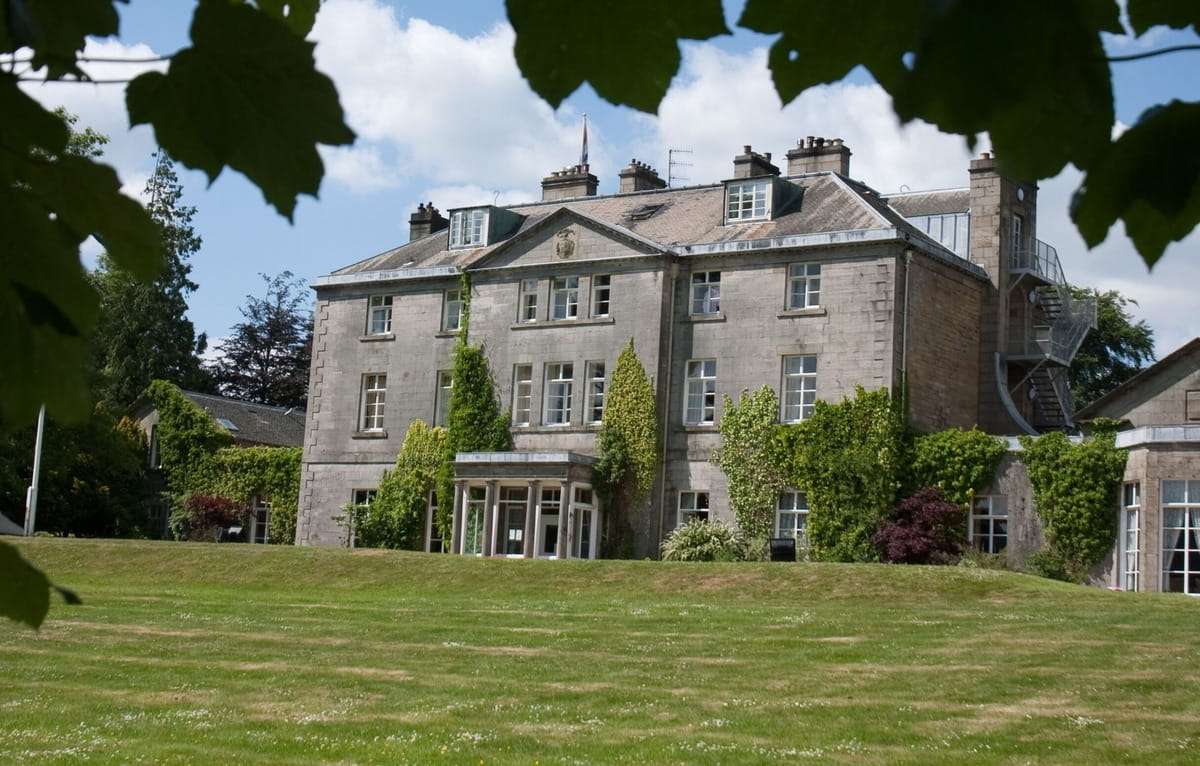
Castle Craig is located at West Linton, near Edinburgh in the UK, EH46 7DH, within 50 acres of the Scottish Borders countryside. With our tranquil surroundings, historic Georgian architecture and state-of-the-art facilities, we provide the perfect environment for healing and rehabilitation, designed to support your recovery every step of the way.
Find Us
If someone in your life is seeking non-religious addiction treatment
-
Understanding what they may be going through
If the person you’re worried about won’t consider rehab because of the religious element, you can assure them that Castle Craig’s programme is completely non-religious. The fact that they’ve already identified what they need from treatment is a positive sign, because it means they’ve already given it a lot of thought.
-
How to talk about treatment
When you raise the subject, take their concern about religion at face value. There’s some reason why they’re wary of religious or spiritual addiction treatment, and if you dismiss it or try to work around it, you risk confirming the fear that their needs won’t be respected.
Let them know you’ve found a programme that doesn’t involve a religious framework, and let them decide what to do with that information.
It helps to have the practical details ready before that conversation, like how admission works and what it costs. If you’d like to talk it through first, you can get in touch with our team confidentially.
-
Our family programme
Castle Craig’s family programme includes family therapy sessions and family workshops. The programme recognises that addiction affects the people around the person as well.
Your involvement is welcome from the start of treatment, and it carries on into continuing care after discharge. Find out more about what Castle Craig is like.
We’ve helped many people turn their lives around

Contact Castle Craig Today
If you’re seeking expert, science-led, private drug and alcohol addiction rehab treatment, Castle Craig is here to help.
To take the next step, call us today on 01721 546 263.
Alternatively, you can fill out our online form to start your journey towards recovery.
Free & Confidential Assessment
Compassion, expertly delivered evidence-based practices and a patient-centred approach are at the heart of our treatment model. Request a call-back from one of our professionals on any day of the week.
Frequently asked questions about non-religious rehab
-
Is there an atheist alternative to AA?
The 12-Step programme isn’t a purely religious approach to addiction treatment. AA themselves describe that their references to ‘god’ don’t have to be a religious entity. The purpose is to think of a higher power, such as nature or the power of the universe, or simply what happens when people come together to help each other.
However, SMART Recovery uses a cognitive-behavioural approach with no spiritual element. Secular Organizations for Sobriety (SOS) and LifeRing Secular Recovery are also non-religious mutual aid programmes.
-
Is there a 12 Step programme specifically for atheists?
There are secular AA groups that follow the 12 Step structure without the spiritual language. The steps were developed for Alcoholics Anonymous, but within AA itself, each person interprets them in their own way.
Castle Craig uses 12 Step facilitation within a medically led framework, and no one is asked to adopt any belief system.
-
Can you be agnostic in AA?
Yes. AA’s own literature is clear that ‘God’ in the steps can mean whatever the individual needs it to mean. Many AA members are agnostic or atheist. The purpose of the ‘higher power’ concept is to recognise that recovery involves more than willpower alone, whether that’s the support of a group, or the structure of the treatment programme.
-
What are the two sins of AA?
The phrase “two sins of AA” traditionally refers to resentment and self-pity – two emotional states that AA’s framework treats as particularly corrosive to recovery.
Resentment keeps attention fixed on what others have done; self-pity keeps it fixed on one’s own misfortune. Both orientations, in AA’s view, pull focus away from the internal work that recovery requires.
The use of the word “sin” here is a framework term rather than a religious one – a way of naming patterns of thinking that AA considers actively harmful to the recovery process, rather than a moral judgement about the person experiencing them.