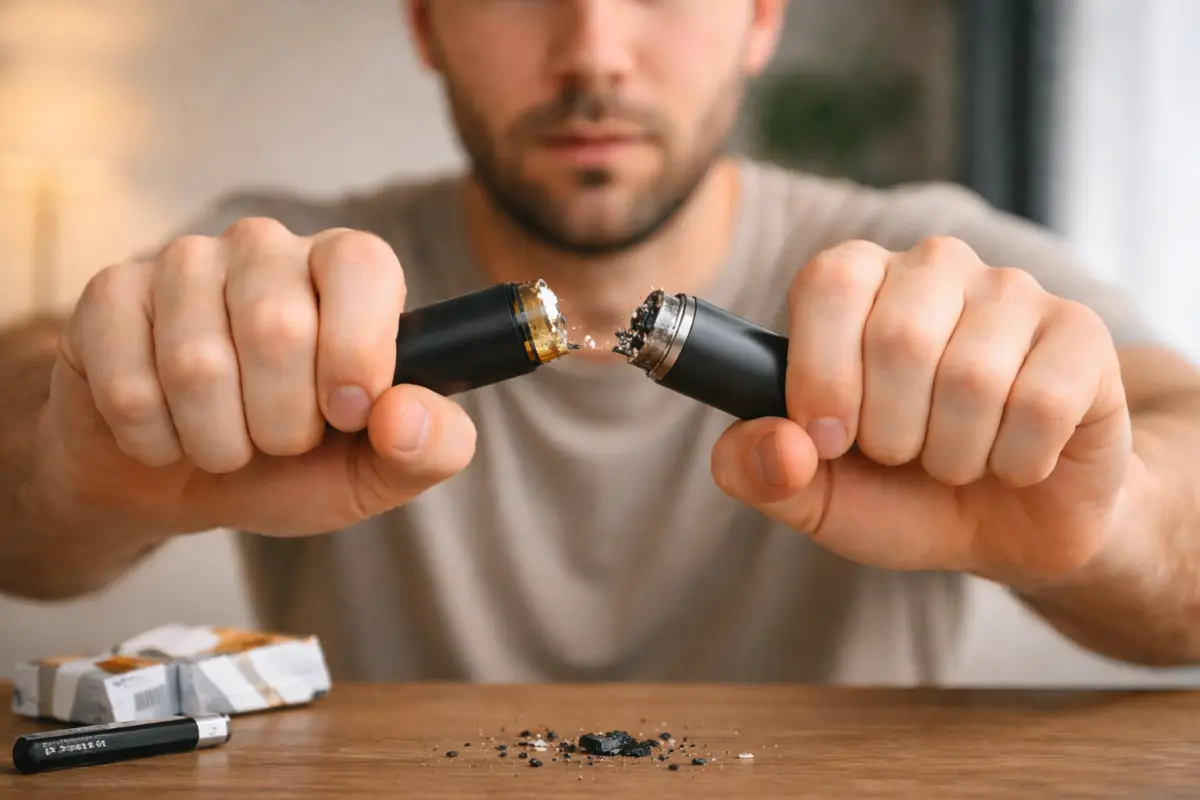

Giving up vaping can be difficult, especially if you are used to having nicotine every day, but deciding to stop is a rewarding choice for your overall wellbeing. This guide will help you understand how to quit vaping and what to expect, with some practical tips and guidance to help you manage cravings and withdrawal symptoms.
We will help you:
- Know when to seek professional support for addiction
- Understand the physical and mental effects of vaping
- Learn what nicotine withdrawal feels like and how to cope
- Discover different methods for quitting (including gradual reduction and cold turkey)
- Get advice on how to avoid e-cigarettes long-term
Among young people and adults in the UK, vaping use has increased 9-fold between 2021 and 2023. This highlights how quickly vaping has increased, and why more people are now questioning their nicotine use.
<h2>What are the side effects of vaping?
In the past, people considered vaping a safer alternative to smoking, but it carries its own risks. E-liquids still contain nicotine, a highly addictive substance, as well as lots of other harmful chemicals. Inhaling vapour can impact both your physical and mental health.
Common side effects of regular vaping
When people switch from cigarettes to vaping, they may believe they are avoiding all side effects. However, the strong stimulants and other ingredients in vaping devices can still cause uncomfortable symptoms. These symptoms can lead to daily distress and disruption.
- Increased anxiety and restlessness
- Low mood or feeling irritable
- Trouble sleeping
- Headaches and dizziness
- Persistent coughing or throat irritation
These issues are signs that you are dealing with the effects of chemicals in vapes, such as nicotine. Low mood can make you want to use your vaping device more often, creating a difficult cycle of dependence.
Long-term side effects of vaping
When a person is addicted to vaping, it’s normal to worry about the long-term damage it might be doing. Unlike smoking cigarettes, however, the full long-term effects of heavy vaping are still being discovered.
We do know, for example, that nicotine causes your blood vessels to constrict, or narrow. This gradually reduces blood flow throughout your entire body. Research suggests that long-term nicotine exposure may affect cardiovascular and respiratory health:
- Increased blood pressure and heart rate
- Respiratory irritation and (in some cases), more serious lung complications
- Dry skin
- Thinning hair
- Poor gum health
- Addiction and an increased chance of taking up cigarette smoking
Vaping is still a relatively new method of nicotine intake; more research is needed to fully understand all the potential long-term health effects. What we know now is enough to show that asking for help to break your addictive cycle is a valuable step for your future wellbeing.
Addiction assessment
Is it hard to quit vaping?
Yes, but it’s possible. To quit successfully, you may need to manage withdrawal symptoms while also changing some of your habits and coping mechanisms. Many people vape because of stress or boredom, so quitting means finding healthier ways to deal with these habits connected to vaping.
Everyone’s experience is different. Some young people quit smoking cigarettes or vaping straight away, while others might need more time and support to manage cravings. What matters most is having a quit plan that works for you.
Nicotine withdrawal timeline
If you’ve been exposed to the drug every day, you will probably experience nicotine withdrawal symptoms after you quit smoking cigarettes or stop vaping. These are usually most intense in the first few days and get better over time.
First 72 hours:
- Irritability, cravings such as feeling the need to vape again, anxiety, headaches, coughing/sore throat, feeling hungry, difficulty concentrating, and sleep disruption
- Your body starts clearing nicotine
Day 4–7:
- Cravings start to lessen, but may still be triggered by habits or environment
- Mood may be low or flat as your brain readjusts to lower nicotine levels
- Generally, the worst of the symptoms should be over after the first week
Weeks 2-4:
- Sleep improves, and energy levels begin to rise
- You may feel more confident and in control
- Cravings occur less often, although they may still be set off by patterns of use, such as stress
After one month:
- Most physical symptoms fade
- Psychological cravings may still appear, but are brief and easier to manage
Psychological withdrawal and nicotine cravings
The mental side of quitting e-cigarettes can be just as hard as the physical nicotine withdrawal symptoms. You might find yourself feeling:
- Anxious
- Low in mood
- Frustrated or easily overwhelmed
- Restless or unable to concentrate
- Developing mood swings
- Tired from disrupted sleep
These feelings are normal and temporary. They don’t mean you’re failing; they’re a sign your brain is adjusting. Practising some mindfulness techniques or talking to someone you trust can help.
This could be a good time to explore therapy with a health professional, especially if vaping was used to cope with difficult emotions.
What’s the best way to stop vaping?
If you want to quit, the best way depends on what works best for you personally, but most people benefit from a mix of preparation and reducing nicotine. A good place to start is to set a quit date and work out what increases your need to vape.
Take vaping products away from your environment and use nicotine replacement therapies like patches or lozenges if needed. Set realistic goals, and be sure to mark key milestones such as celebrating having 30, 60 and 90 days vape-free. Support from healthcare professionals or stop smoking services can help you manage this safely.
In some cases, especially if vaping e-cigarettes is linked to stress or other substance use, professional help such as counselling or residential rehab may be more effective.
-
Abstinence
Some people set a quit date and stop vaping or using tobacco products immediately. This method works best if you’re highly motivated and can cope with the initial discomfort. Your cravings might be intense at first, but they usually stop within a couple of weeks. Don’t be disheartened if you struggle with this, as many people need to quit gradually with extra support.
-
Taper gradually
This means slowly reducing how much nicotine you use or how often you vape e-cigarettes. You could switch to lower-strength e-liquids, only vape at certain times during the day, or reduce the number of puffs you have. This method may feel more manageable for some, but it still requires consistency and willpower.
-
Use nicotine replacement therapy (NRT)
Nicotine replacement therapy (NRT) products like nicotine patches, gum, sprays, or lozenges can help reduce cravings and ease withdrawal slowly. These are available from pharmacies and may be prescribed by your GP or local stop smoking service. Always consult a specialist to avoid the risk of becoming addicted to another nicotine product.
Get behavioural support
Speaking with a behavioural health professional or using stop vaping services can be a huge help if you want to quit. Cognitive behavioural therapy (CBT) is especially helpful for managing thoughts and patterns linked to vaping or smoking cigarettes.
At Castle Craig, our model of addiction treatment requires that patients abstain from substances. However, you may receive medication-assisted treatment (MAT) during detox if your withdrawal symptoms are more severe. Contact our admissions team to discuss our drug or alcohol withdrawal care confidentially over the phone.
Proven strategies: practical tips to help you quit vaping
- Remove all vaping products from your home, bag, and car
- Write down your reasons for quitting and read them when cravings hit
- Replace the habit with chewing gum or deep breathing to keep your mind and mouth busy
- Avoid habits connected to vaping and stay away from places or routines linked to vaping
- Set small goals, as even getting through one craving at a time is progress
- Reward yourself by tracking your success and celebrating milestones
- Don’t be afraid to ask for help, use support groups and those around you to stay motivated
- Remember that relapse often occurs as part of recovery, and that this is not failure
Should I quit vaping during drug or alcohol rehab?
If you are already in treatment for addiction, it might be the best time to address your vaping habit.
In many cases, yes, it can help you feel more in control and complement your overall recovery.
Research shows that smoking can make it harder to stop drinking, and nicotine use can interfere with recovery from other substances.
If you need to wait, that is perfectly okay too, and your rehab provider can give you support for quitting nicotine during your aftercare.
Castle Craig offers help for those who want to address vaping and nicotine dependence during rehab for conditions such as alcohol and drug addiction. We understand that this takes real courage. Find out more about our smoking cessation support.
When to seek professional help for nicotine addiction
If you’ve tried to quit vaping on your own and keep going back to it after a few tries, don’t be put off. You might benefit from more structured support. Alongside your drug or alcohol care plan, Castle Craig provides:
- A strategy designed for you to help you stop vaping
- Therapy to address the underlying causes of dependence
- Ongoing care after discharge
Taking the first step often seems the hardest, but we are here to guide you with genuine care. Contact us or book a confidential consultation today to talk directly to an addiction specialist. This is a pressure-free conversation designed to help you understand your situation and explore your options for recovery.
Frequently asked questions
-
How long does it take to quit vaping?
For many people, physical symptoms ease within two weeks, although experiences vary. However, cravings can last for several months, although these typically get easier to manage over time. Your specific habits and patterns will guide your personal recovery timeline.
-
Is quitting vaping as hard as quitting smoking?
Quitting vaping can be difficult, as everyone is different. Both vapes and cigarettes contain nicotine, the chemical that is responsible for their addictive properties. Vaping often becomes a habit, making the behavioural changes the real challenge. Much like stopping smoking, you may need to focus more on building new coping strategies for managing your habits connected to vaping.
-
What are the side effects of quitting vaping?
When quitting, you may experience restlessness, anxiety, irritability, or tiredness. These symptoms are temporary signs that your system is simply adjusting, and should stop after several weeks of abstinence.
-
Can I quit vaping cold turkey?
Yes, you can quit “cold turkey” without medication, just like some people quit cigarettes. This can be quite challenging, and there is a reasonable chance of relapse when stopping suddenly. Preparation is key to making the journey manageable. You may consider gradually reducing your nicotine, which can help to ease cravings and make dealing with the physical changes less challenging.
-
Can rehab help me quit vaping?
Yes, if you are with us for alcohol or drug support, Castle Craig can help you quit vaping. We offer personalised assistance for managing strong cravings and reducing your reliance on vape products. Addressing nicotine use alongside other substances may support long-term recovery.
Ready to quit vaping? Contact us or book a confidential consultation to learn how Castle Craig can help.