


So much of our lives are now connected to our phones; our work and livelihoods, social lives and leisure time, as well as all our beloved photos.
This is causing phone addiction to become a challenge across all demographics. It’s a dependency that can take anyone by surprise, and many people notice it in others before they ever suspect they may be addicted too.
It’s too easy to take your phone out of your pocket to simply check a notification, which reminds you to respond to an Instagram message, which subsequently turns into scrolling through your reels feed… suddenly an hour has passed without even realising.
If you have noticed concerning patterns in yourself, or someone you know, it’s worth learning a little more about how and why phone addiction develops, as well as when help might be needed.
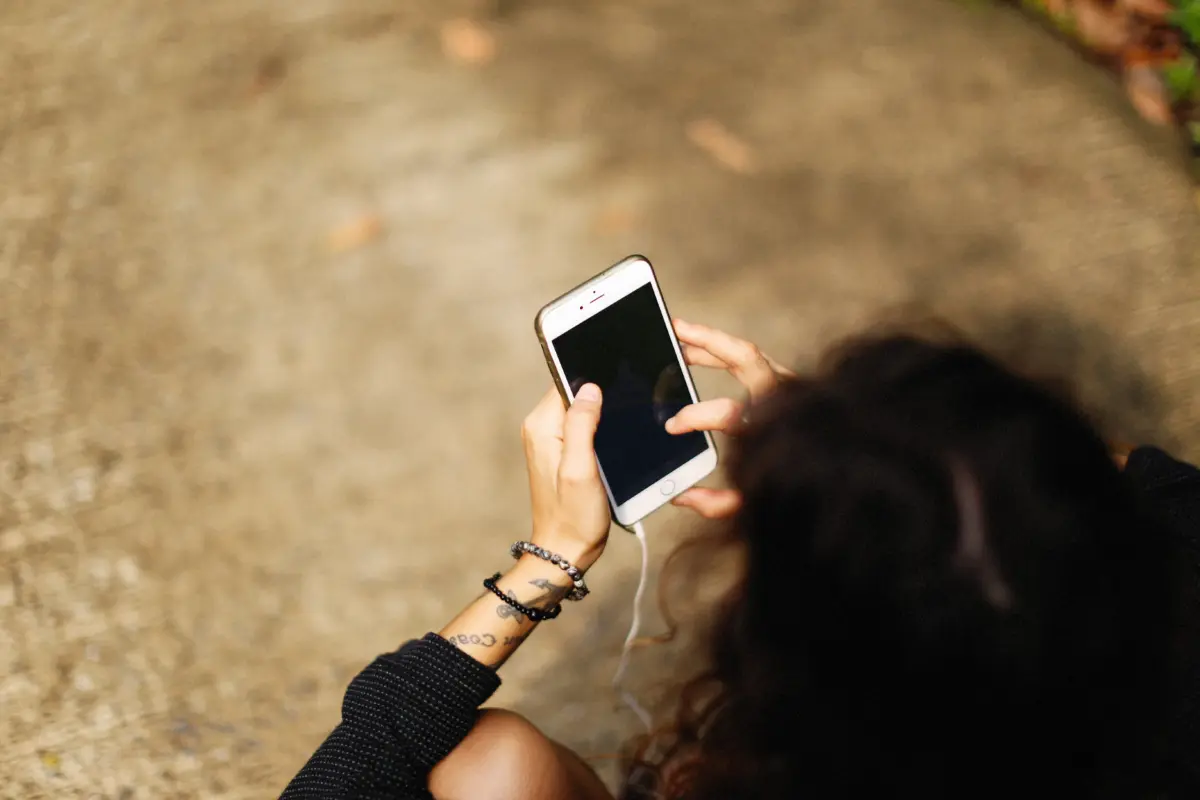
Understanding mobile phone addiction
What is phone addiction?
Phone addiction is a term that describes compulsive smartphone use that affects your life, sleep, relationships and even your health. It sits in the same clinical category as gambling disorder, which is currently the only behavioural addiction formally recognised by the DSM-5.
Gaming disorder was also recognised by the ICD-11 in 2019, and can look similar to compulsive phone use.
At the base level; a pattern of losing control over use and carrying on despite harm is similar as seen in all addictions.
That has made the case for phone addiction’s inclusion harder to dismiss.
A 2016 review in Frontiers in Psychiatry looked at whether excessive phone use could constitute addiction. It found the debate follows the same pattern as the wider question of which behavioural addictions should join compulsive gambling in the DSM-5.
There’s a related term, nomophobia, which means a more specific fear of being without your phone. Phone addiction is the bigger picture, where you keep reaching for your phone even when you can see it’s causing problems.
“During my stay at Castle Craig I was made to feel accepted and safe. It is a beautiful place with very caring staff. For me it was a life changing experience. And helped me so much. I’m looking forward to the future one step at a time.”
Verified Castle Craig patient
How phone addiction affects the brain
Every time you check your phone and see a like or a new message, your brain releases a small amount of dopamine; the chemical central to our brain’s motivation and reward system.
This system responds more to the anticipation than to the reward itself, and so mobile phone addiction works a little like gambling in this sense. Social media feeds and apps use variable-ratio reinforcement, the same mechanism behind fruit machines. Essentially; you don’t know when the next reward is coming, so you keep checking.
Research from the University of Texas Permian Basin finds that each interaction with a smartphone triggers a surge of dopamine, followed by a dip that functions like a craving.
If a person isn’t addicted to their phone, the craving passes. If they keep going, the brain compensates with lower and lower dips, needing more stimulation to reach the same level.
This follows a similar pattern to what is called “tolerance” in substance addiction; checking once an hour becomes once every ten minutes, or what was meant to be a ‘quick scroll becomes’ 45 minutes.
Withdrawal can be significant, too. It isn’t dangerous the way withdrawal from alcohol or certain medications can be. You might feel restless or anxious without your phone, but this will pass without medical help.

Seek Help Today
Signs and symptoms of phone addiction
Phone addiction symptoms are easy to dismiss as normal behaviour, partly because of how much we all use our phones. Researchers at the University of Rochester Medical Center have identified key signs of problematic phone use.
-
Behavioural signs
Repeatedly trying to reduce your screen time and not managing it
Reaching for your phone the moment things go quiet
Hiding or lying about how much time you spend on it
Continuing to use it even when you can see the negative effect it’s having
-
Emotional signs
Feeling anxious or panicky when your phone isn’t within reach
A persistent sense of FOMO (fear of missing out)
Low mood or irritability after long periods of scrolling
-
Physical signs
Disrupted sleep, particularly if you use your phone in bed
Phantom vibrations – the sensation of hearing or feeling your phone buzz when it hasn’t (associated with both heavy phone use and underlying anxiety)
Eye strain or headaches from extended screen time
Most people will relate to some of these, and recognising a few doesn’t mean you have a behavioural addiction.
The distinction lies in whether these things get worse over time and begin to affect your day-to-day life.
What causes phone addiction?
Phone addiction dosn’t always develop in isolation. It can be connected to something going on under the surface.
The most common underlying factors are anxiety, depression, ADHD, loneliness and unresolved trauma. For a lot of people, the phone is how they cope with feelings they haven’t found another way to deal with.
A 2025 study in the International Journal of Environmental Research and Public Health found that addiction, including smartphone addiction, can result from the interaction between genetics and environment. Phone use tends to creep up when there’s less going on in the rest of your life, and your phone fills the gap.
If you’re already managing mental health challenges alongside addictive behaviour, the two can reinforce each other.
Castle Craig treats these together through our addiction and mental health programme.
Your phone is also not a neutral tool. Apps and social media platforms are designed to hold your attention as long as possible. Features like infinite scroll and autoplay keep triggering reward responses. This helps to explain why willpower on its own often falls short.
Phone addiction is particularly common among teenagers and young adults. If you’re a parent concerned about a young person’s phone use, Castle Craig offers specific guidance on addiction treatment for teenagers.
The impact of phone addiction on daily life
Compulsive phone use can affect every area of your life:
-
Sleep
Harvard Medical School found that blue light from screens suppressed melatonin for roughly twice as long as other wavelengths. A study of more than 600 adults linked late-night phone use to difficulty falling asleep and declining sleep quality. Further research has found that phone use before bed can delay falling asleep by two to three hours.
-
Relationships
When your phone keeps taking priority over friends and family, people close to you can start to feel like they come second.
-
Work and concentration
A 2017 study by Ward et al. at the University of Texas found that the mere presence of a smartphone in the room reduced cognitive performance, even when the phone was off and face down.
-
Mental health
Compulsive phone use can worsen anxiety and low mood, and anxiety and low mood can drive more phone use. Once that loop starts, it’s hard to break on your own.
How to reduce phone addiction: strategies that work
These strategies are genuinely effective, and for a lot of people they’ll be enough. If you try them and they don’t stick, you may need professional help to find out what’s driving the behaviour.
Environmental changes
- Leave your phone in a different room, not just face down. Ward et al.’s 2017 “Brain Drain” study found that even a switched-off phone on the table reduced cognitive performance.
- Charge your phone somewhere that means standing up. The kitchen, the hallway, anywhere other than your bedside table.
- Log out of apps after every use. Re-entering a password interrupts the automatic reach-and-scroll pattern.
- Use a physical timer or alarm clock. If you’re picking up your phone to check the time or set a timer, you’ll end up staying on it.
Behavioural techniques
- Try urge surfing. This is a technique from relapse prevention in addiction treatment. When the urge to check your phone hits, don’t fight it and don’t act on it. Just notice it. Urges typically peak within 90 seconds and fade if you don’t feed them.
- Identify the emotional trigger, not just the situational one. Most advice focuses on when you reach for your phone. It’s often more useful to ask what you’re avoiding.
- Replace the function, not just the behaviour. Think about what the phone was actually giving you and find something else that does the same job. If it was stimulation, you need something stimulating, not a meditation app.
Structural changes
- Audit which apps you open versus which ones notify you. They are different problems. Notifications are interruptions. The app you unlock 80 times a day without being prompted is a habit. Your phone’s built-in usage tracker can show you the difference.
- Turn your phone off for set windows. Not silent, not do not disturb. Off. There’s a real difference between knowing you could check your phone and knowing you can’t.
When phone addiction needs professional support
If those strategies weren’t enough, and if any of the following sounds familiar, it may be time to talk to someone:
- You’ve tried to cut down unsuccessfully more than once
- Your phone use keeps escalating even though you can see the consequences
- Your mental health has got noticeably worse
- Work or relationships are being seriously affected
- Your phone has become your main way of coping with difficult emotions
Castle Craig has treated addiction in a residential setting since 1988. We treat behavioural addictions alongside substance addictions because they often co-occur.
There’s more detail on our approach to treatment and on what inpatient addiction treatment looks like. If you’re worried about how much rehab costs, we have a breakdown of funding options.
Reaching out doesn’t mean committing to anything. It can just mean a conversation about where you are and how we can help.
If you’re worried about someone else’s phone use, it can be difficult to know whether what you’re seeing is serious, and harder still to know what to say about it.
Phone use can be so normalised that raising concerns can feel like an overreaction. If you’d like to talk it through, our team is available seven days a week for a confidential conversation.
There’s no pressure and no obligation. Just someone who can help you work out what, if anything, the right next step might be.
Frequently asked questions about phone addiction
-
Can phone addiction cause brain fog?
Yes. Compulsive phone use fragments your attention through constant task-switching. Your brain doesn’t get the sustained focus it needs, and that can leave you feeling scattered or foggy. It’s not permanent. Your brain is tired from overstimulation and may clear up when phone use comes down.
-
Is phone addiction the same as social media addiction?
Not quite. Social media addiction is one form of compulsive phone use, but phone addiction is broader. Some people compulsively check news apps, email, games or messaging platforms with no social media involvement at all. What they have in common is the compulsive reaching for the phone, whatever’s on the screen.
-
Are there apps that help with phone addiction?
Built-in tools like Screen Time (iPhone) and Digital Wellbeing (Android) can help you see how much time you’re spending and set daily limits. Third-party apps like One Sec or Opal add friction before you open certain apps. But you’re still using your phone to manage your phone use, which keeps you engaged with the device. They’re a good place to start, but they won’t fix the problem on their own.
-
How long does it take to break a phone addiction?
There’s no fixed timeline. It depends on how deep the habit runs and what’s behind it. Some people notice a real change within a few weeks. If your phone use is tied up with anxiety or low mood, it may take longer, and professional support might be the more realistic route. Be cautious of any source claiming a set number of days.
-
Can phone addiction lead to depression?
The evidence suggests the relationship runs both ways. Extended compulsive phone use can worsen low mood, disrupt sleep and increase social isolation, all of which feed into depression. Equally, people already experiencing depression are more likely to use their phones compulsively to cope. If your phone use and your mood are both getting worse at the same time, you can talk to us about it.
Experts You Can Trust
With a wealth of knowledge and services to help you regain control of your life, request a call-back from one of our professionals today. The choice you make today could change your life forever.