


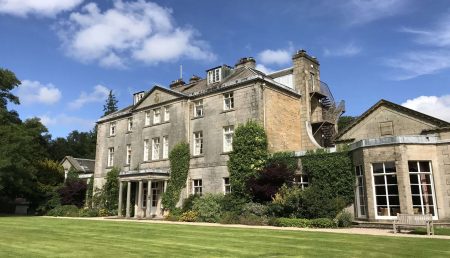
Castle Craig is a residential drug rehab centre near Edinburgh, with a treatment programme that’s been refined over 40 years.
We have been providing drug addiction treatment in Scotland since 1988. In that time, we’ve helped thousands on their journey to sustainable recovery from drug addiction, building completely new lives.
Some of which were people who’d tried to stop before and had given up believing that it was even possible.

Start your journey into addiction recovery
Drug rehab for specific addictions
Drug addiction treatment is not the same for every substance – different drugs carry different risks, detox protocols, and treatment requirements.
That’s why we offer specialist drug rehab programmes for a range of substances. Each draws on the same clinical foundation, adapted to meet the specific needs of that addiction and the individual patient, including (but not limited to):


What does drug rehab involve?
Drug rehab is a structured programme of treatment for people whose drug use has become unmanageable. In a residential setting, you live on-site for the duration of your stay and focus on your recovery, away from the everyday pressures and situations that might be feeding into addiction.
Wrapping care around you in this way means you can focus solely on your journey to recovery.
Most residential drug rehab programmes follow two stages:
- Detox clears the substance from your body, and helps to manage withdrawal safely.
- Primary treatment then begins. This is the longer therapeutic phase where you work with therapists to understand and address the roots of addictive behaviours.
At Castle Health, that begins with our Foundation Programme and continues in our Advanced Programme. Continuing care is the third stage, beginning before you leave and continuing after discharge.
Outpatient addiction treatment works differently. You attend sessions on scheduled days but live at home. For people with a severe or long-standing drug addiction, residential rehab tends to curate more sustainable recovery. For others, outpatient treatment fits better, particularly as a step-down after residential care.
-
Drug rehab at Castle Craig
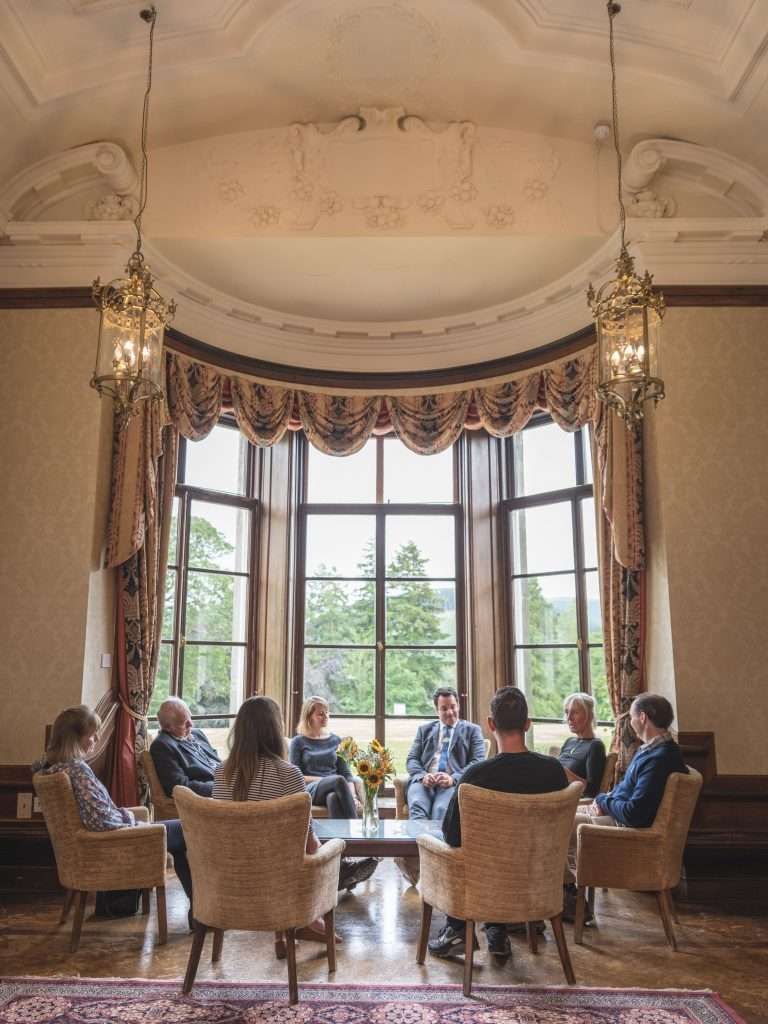
Castle Craig is designed as a therapeutic community, regulated by Health Improvement Scotland. You live alongside people at different stages of their own recovery, in a structured environment away from everyday life. The peer relationships that form during treatment can be very important for recovery. Being around people doing the same work and seeing them get better shows that it’s possible for you too.
We recommend a minimum four to six-week stay – this gives enough time for a full assessment, detox where needed, and the Foundation Programme itself.
-
Medically supervised drug detox
For many, the first question about residential drug rehab is what happens during detox. The answer depends on the substance.
Withdrawing from opioids or benzodiazepines, for example, carries medical risk and needs different supervision to that of cannabis, for example. Clinical best-practice guidance on detox assessment confirms that a full assessment of a person’s drug dependency and health needs must be completed before treatment begins, with physical health monitoring throughout withdrawal.
Whether medication is needed during detox depends on the substance. Opioid and benzodiazepine withdrawal usually needs medical management. For people who also have a physical dependence on alcohol, withdrawal carries risks that needs the same medical management. Conversely, people detoxing from cannabis or cocaine generally don’t need it.
At Castle Craig, all patients have a clinical assessment before starting a drug detox programme. This allows our clinicians to prescribe the appropriate medication.
-
Evidence-based drug addiction treatment
Once detox is complete, or where no detox is required, the therapeutic work begins. Our Foundation Programme centres on individual therapy twice a week and daily group work, with 12 Step Facilitation running through it.
Addiction affects the body and emotions as much as behaviour. For this reason, holistic activities also run alongside the formal sessions throughout the week, supporting physical and emotional wellbeing as part of the same programme.
Beyond six weeks, patients move into the Advanced Programme. This is a chance to look more deeply into what drove the addiction.
Our therapists use CBT (Cognitive Behavioural Therapy) and EMDR (Eye Movement Desensitisation and Reprocessing), among other evidence-based approaches. American research confirms that CBT works for addiction, whether used on its own or alongside other therapies. Research published by Dr Wiebren Markus’s suggests EMDR can help reduce cravings by reprocessing the memories and associations connected to drug use.
We also provide dual diagnosis support for people managing a mental health condition alongside their addiction. If your dependency involves prescription medication, Castle Craig treats that too.
Download Our Brochure
How long does drug rehab take?
How long treatment takes depends mostly on the substance involved, how long you’ve been using, whether there are other mental health conditions to address, and how complex detox turns out to be.
Studies have found that longer residential treatment leads to better outcomes, and many people choose to stay longer with us.
Research in the journal Addiction and in JAMA Psychiatry found that the longer someone stays in residential treatment, the greater the improvement in drug use. Those who stayed less than three months showed the least improvement.
Your treatment team will discuss their recommendations with you, and you can make a decision together.
Life after drug rehab
Research published in the journal Addiction found that the six months after intensive residential treatment are the period of greatest relapse risk. The same study found that structured aftercare, whether built around relapse prevention or 12 Step Facilitation, improved how people did in the following months.
Every patient leaves Castle Craig with a continuing care plan already in place. The plan is developed with your therapist and covers therapy options, support group access, and what to do if things get difficult.
After treatment, you’re welcome to join our Recovery Club, a free weekly online support group that runs for 12 months. For more intensive support, we offer specialist outpatient services for individual and group therapy and recovery coaching.
Paying for drug rehab
Cost is one of the most common reasons people delay reaching out.
Self-funding patients can usually access a place at Castle Craig within 24 hours of completing their assessment. We accept private health insurance from many major providers, including Aetna, Aviva, Bupa, and Vitality. If you’re not sure whether your policy covers residential rehab treatment, speak to your insurer, or our admissions team can help you check.
NHS-funded drug rehab is available in some cases. Your GP or a social worker can refer you to a local drug and alcohol team for assessment. Waiting times on the NHS can be long, but it’s an option for people who can’t fund treatment themselves. Find out more about how much drug rehab costs, or read about NHS-funded drug rehab.
If cost is a concern, our team will talk you through your options.
-
Self-funding
Castle Craig is a residential drug rehab centre near Edinburgh, with a treatment programme that’s been refined over 40 years.
We have been providing drug addiction treatment in Scotland since 1983. In that time, we’ve helped thousands on their journey to sustainable recovery from drug addiction, building completely new lives.
Some of which were people who’d tried to stop before and had given up believing that it was even possible.
Self-funding patients can usually access private residential rehab in as little as 24 hours.
-
Health Insurance
Castle Craig accepts many major private health insurance companies, including Aetna, Aviva, Bupa, Vitality and many others. Call your provider today, and once your treatment has been authorised at our drug rehab, we can assist you with our insurance admissions steps to ensure a smoother process.
-
NHS Funding
NHS rehab services are free, and your GP or social worker can refer you to a local drug and alcohol team for assessment, often for outpatient treatment. NHS services can be a lifeline for those unable to afford inpatient treatment, but waiting lists can be problematic.
-
Charity Funding
Some drug rehabs operate as charities. These non-profit organisations might be donation-based, or funded by social businesses, which sometimes employ people who have been through treatment themselves.
-
Free Support Groups
Non-profit support groups such as Narcotics Anonymous can be found in all cities and towns. NA meetings are open to anyone seeking abstinence from addiction, regardless of the type of substance used. The only requirement for membership is a desire to stop using drugs, and meetings are free and confidential. In their own words: “If you have a problem with drugs, we are recovering drug addicts who can help you get and stay clean.”
Book a free, confidential assessment
Inpatient drug addiction rehab for someone in your life
Partners, friends and families are affected by drug addiction too, and that is an experience that deserves dedicated care.
We can help you understand what’s happening, what your options are, and what kind of support might be most useful. That could mean individual therapy, couples work, or even family therapy, depending on what fits best into your life.
Our team has specialist experience in helping those indirectly affected by drug addiction, and how it affects relationships. We can help you understand what’s available and make sense of your options.
Frequently asked questions about drug rehab
-
What is the difference between inpatient and outpatient drug rehab?
Inpatient rehab means living at the treatment centre for the duration of your stay. You have clinical support through the night if you need it, and you’re away from the day-to-day situations that make it harder to stop.
Outpatient addiction treatment follows a similar therapeutic model, but you attend on scheduled days and live at home.
Outpatient treatment works well for people with a milder dependency or as a step-down after completing a residential programme. For severe or long-standing addiction, residential treatment tends to produce better results.
-
Can I access drug rehab on the NHS?
Yes. NHS-funded drug rehab is available in the UK. A referral from your GP or a social worker is the usual route in. NHS services mostly offer outpatient treatment, though residential rehab on the NHS is sometimes available. Waiting times can be long. Find out more about NHS-funded drug rehab.
-
Can family members visit during drug rehab?
Yes. Family visits are welcomed at Castle Craig, typically on Sundays later in the treatment stay. We also run online family workshops, included in the cost of treatment. These are open to family members, whether they visit in person or not.
Family members can also access Al-Anon groups for their own support throughout the process.
-
How do I help someone in my life access drug rehab?
Please call our admissions team. We can talk you through what drug rehab involves, what to expect from the admissions process, and how to have the conversation with someone who may not yet be ready to ask for help themselves. You don’t need to have them with you when you call.
Confidential Drug Addiction Assessment
Compassionate, expertly delivered evidence-based practices and a patient-centred approach are at the heart of our treatment model. Request a call-back from one of our professionals on any day of the week.