

Group therapy for addiction is a daily part of treatment at Castle Craig; every weekday morning, a small group of patients meets with one of our specialist addiction therapists. It’s one of our residential addiction treatment programme’s clinical cornerstones.
For many people, the idea of talking about their lives in front of others is the thing they dread most about coming to addiction rehab. We keep the sessions confidential, carefully planned, and deliberately small.
With time, even the most nervous patients begin to feel more comfortable sharing their experiences. Group therapy helps you understand that others have been through the same things and enables you to learn from people at different stages of recovery.
No pressure, never any obligations
What happens in a group therapy for addiction session
-
The structure of a session
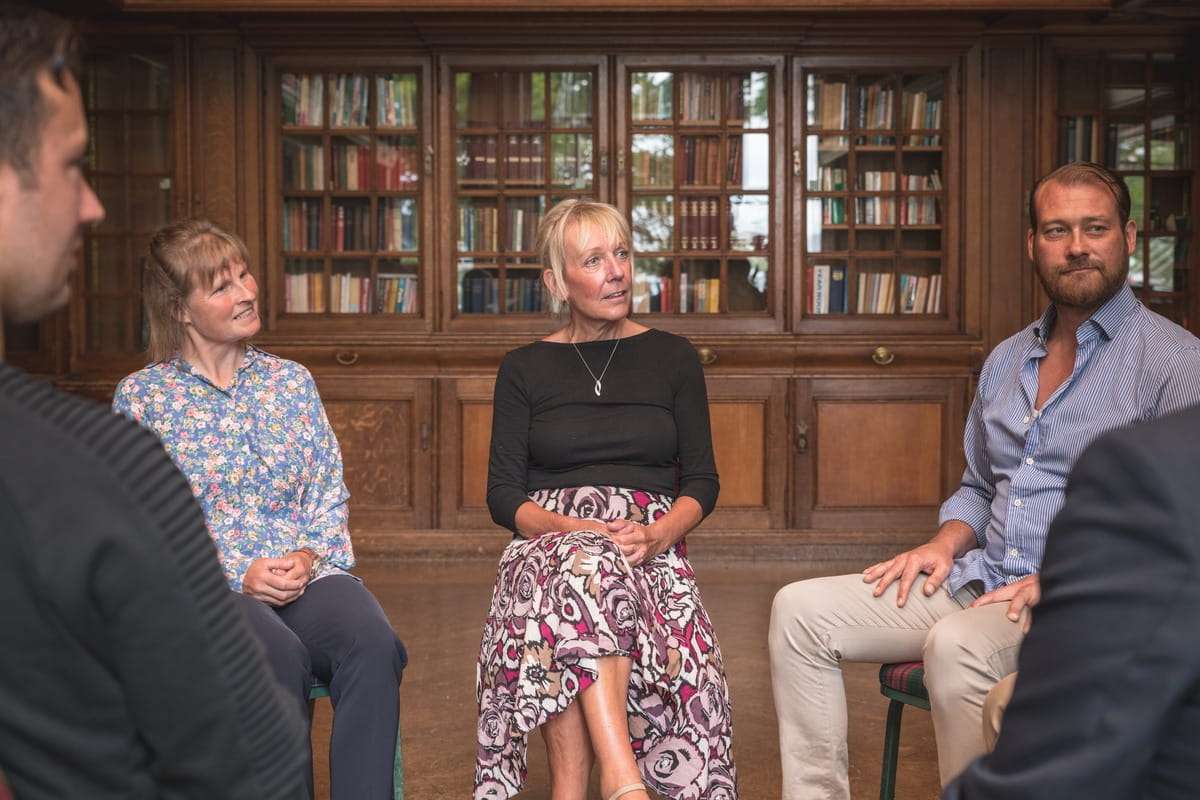
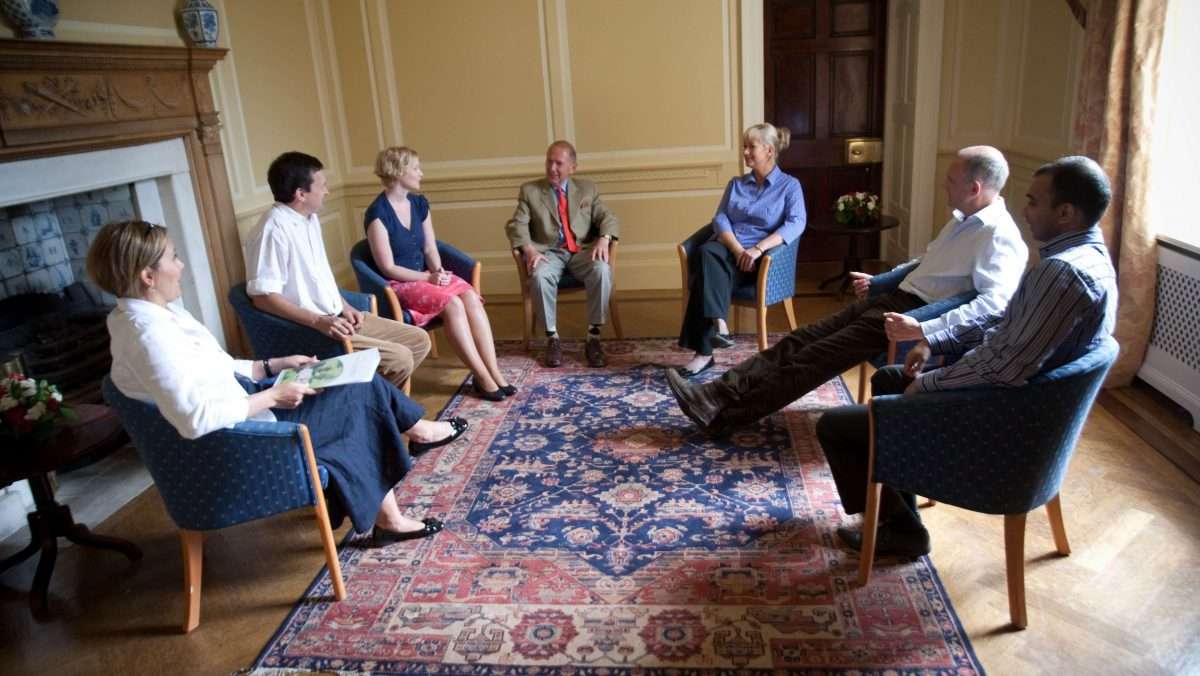
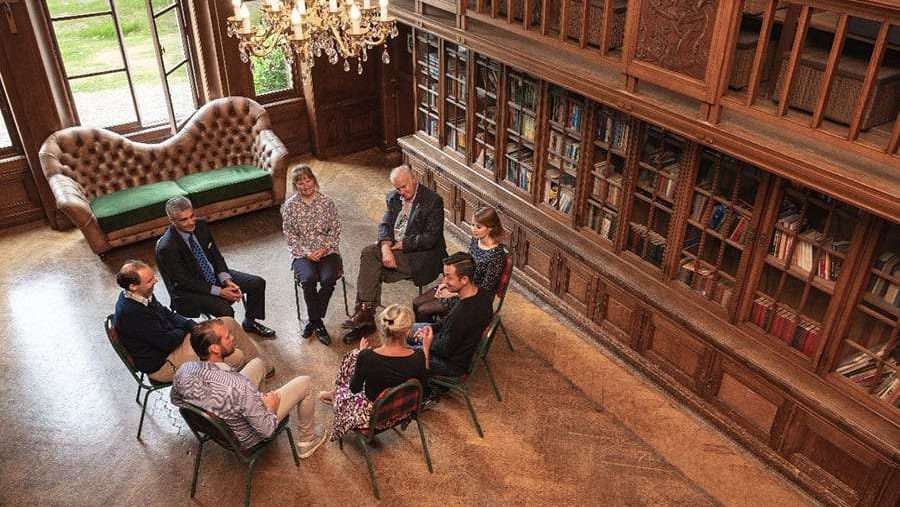
Group therapy at Castle Craig is carefully planned and structured. Eight to 10 patients sit with one another, with a specialist addiction therapist, to facilitate the group discussion. They are not present to conduct it, rather they listen and reflect back what they hear.
Each session begins with a check-in. One by one, each person says how they’re feeling. Nobody is put on the spot, and there’s no pressure to do any more than that at this point.
After the check-in, the session opens up. Someone might share a piece of assigned work, such as their life story. Another person raises what they are finding difficult that week. The group as a whole may then look at how addiction has affected their relationships.
If something comes up in a session that you need to talk through further, you can raise it with your individual therapist. Group sessions and individual sessions run side by side, and things from one can carry into the other. -
Why the group is kept small
For many people, talking about personal things in front of others can be understandably daunting. That’s one of the reasons that we keep group sizes so small.
A review of 17 studies covering more than 21,000 participants found tentative evidence of better outcomes in smaller groups. Separate research in group therapy settings found that symptom improvement was comparable for groups of up to eight, but then slowed down at a group size of ten.
While the evidence on group size is still developing, Castle Craig finds keeping groups to eight to 10 people helps people feel more comfortable about sharing. -
Confidentiality in group therapy for addiction
When you arrive at Castle Craig, you sign a confidentiality agreement as part of the admissions process. Every member of the group makes that same commitment when they join.
What gets said in the group stays in the group. It’s a formal commitment that every group member makes, and it’s reinforced at the start of every session. The therapist facilitating the group is also bound by the same commitment.
“Understanding addiction and my part in the recovery process. I understand more in depth the importance of self-care and where I got lost during the process. I am ready to work on myself and participate in Al-Anon.”
The benefits of group therapy for addiction
-
What group therapy for addiction gives you that one-to-one therapy cannot
At Castle Craig, every patient has both group therapy and individual therapy as standard parts of their programme.
Peer support in addiction treatment group therapy provides the chance to get advice from people who’ve done it before, and learn from what worked for them. Knowing that someone who was in the same position has come through it can give people something to hold on to.
Group therapy also means that you are held accountable by peers rather than a professional. When you’ve told eight peers that you’re going to hit a particular milestone, you may be more likely to see it out.
The effectiveness of group therapy is well established and has driven its widespread use in addiction treatment.
-
Specialist group therapy sessions at Castle Craig
Beyond the daily morning group, Castle Craig runs specialist group therapy sessions for patients with specific needs. Which sessions each patient needs is decided based on their medical assessment. For example:
- The eating disorders group looks at how addiction and disordered eating overlap. The two often occur together and need treating together.
- The trauma group addresses the memories and experiences that often underlie addiction.
- The grief group focuses on bereavement, a common trigger that general group sessions don’t always address properly.
- The women’s group gives a gender-specific setting for issues that benefit from it.
- The relapse prevention group focuses on the practical work of protecting the progress made during treatment and preparing for life after residential care.

Download Our Brochure
If someone in your life is considering group therapy for addiction
If you’re researching this on behalf of someone in your life, you’re probably wondering whether the thought of speaking in front of strangers will put them off.
We design the sessions around that concern. The group is small, and we don’t push anyone beyond where they’re ready to go. The therapist’s role is to keep the group safe and purposeful, not to confront anyone or make them feel bad about what’s happened.
For people with alcohol addiction or substance dependencies, the other group members are often what they remember most from treatment. For the person you’re supporting, hearing from someone who has already been through it can be more helpful and relatable than anything a professional says.
Family therapy and family workshops run alongside the residential programme. These support everyone through the treatment process and begin repairing relationships.
If you are considering funding options, you can find out more about how much rehab costs.
How Can Castle Craig Help?
Get Help Today
Frequently asked questions about group therapy for addiction
-
Are there different types of group therapy approaches used in addiction treatment?
Several approaches are used in group addiction therapy, often in combination. Cognitive Behavioural Therapy (CBT)-based groups focus on identifying and changing the thinking patterns that drive addictive behaviour. Psychodynamic groups look at the emotional and relational roots of addiction. 12 Step-facilitated groups are structured around the 12 Step model and are often used alongside AA or NA. Trauma-informed groups are designed for people whose addiction is connected to traumatic experience.
At Castle Craig, the approach used depends on the group and the clinical needs of the people in it.
-
How long does group therapy for addiction typically last within a residential programme?
At Castle Craig, group therapy for addiction runs every weekday morning throughout the residential stay. The Foundation Programme lasts six weeks, and many patients stay longer depending on their needs. Group therapy is part of the daily timetable from the first week.
The frequency is deliberate. Daily sessions keep the work of group therapy consistent, so you can carry insights from one session into the next.
-
What are typical group therapy topics in addiction recovery sessions?
The topics that come up in addiction group therapy are different from those in general group therapy, because recovery is always the focus. Life story work is common, helping people trace the roots and patterns of their addiction. Group members explore relapse triggers practically, with real detail about what their own triggers look like. Grief and the relationships that addiction has damaged come up regularly, too.
Addiction group therapy is distinct because everyone in the room is working on the same underlying challenge from different angles. That shared context makes the conversations more specific than they’d be in general group therapy.
-
What kinds of group therapy exercises are used in addiction recovery?
The check-in is the foundation of each session. Going around the circle and saying how you feel builds the habit of naming your emotional state rather than acting it out. That’s a core skill in recovery.
Other exercises include reflective listening. Group members respond to what they actually heard rather than what they assumed. Peer feedback on assigned work and structured discussion of relapse scenarios are also common. The group discusses assigned therapeutic work from between sessions the following day.